-
See What A 'Made In Nigeria' Car Looks Like
The Executive Director/Chief Executive of the Nigerian Export Promotion Council (NEPC), Segun Awolowo, posted the made in Nigeria SUV pictured above, manufactured by...
-
Happy Birthday Wale Soyinka !!!
We are sending birthday wishes to someone very special to us and our Nation Nigeria, Professor Wole Soyinka....
-
Drogba and Eboue face disciplinary action over Mandela tribute
Galatasaray stars Didier Drogba and Emmanuel Eboue face disciplinary action over their tribute to Nelson Mandela after the reigning Turkish champions' win over Elazigspor on Friday.Drogba revealed a T-shirt with...
Tuesday, 10 December 2013
17-Year-Old Girl Injects Flesh Eating Bacteria Into Her Genitals
Tuesday, 22 October 2013
Men warned not to share wife’s breast while breast feeding..REPORT
MEN have been advised to keep away from their wives’ breasts while they are
breast feeding their children to avoid inflicting wounds on the breasts and exposing the
children to infection.
Professor Angela Oyo Ita, the Cross River State Commissioner for Health who gave the advice
while flagging- off the 2013 Breast Feeding Week at Akpabuyo local Government Area of the
state on Tuesday, stated that men sharing Monday, 21 October 2013
18 facts you (probably) didn't know about the human body
Did you know that a postage-stamp sized piece of circumcised foreskin, takes only 21 days to
grow enough to cover 3 basketball courts?
This info-graphic will blow your mind with its 18 facts on the crazy, yet amazing stuff our
bodies can do. Store a couple of these away and whip them out at your next dinner party or
business lunch they are guaranteed to make an impression whilst proving some very
interesting conversation.
Sunday, 20 October 2013
10 Psychological Studies That Will Change What You ThinkYou Know About Yourself
Why do we do the things we do? Despite our best attempts to "know
thyself," the truth is that we often know astonishingly little about our
own minds, and even less about the way others think. As Charles
Dickens once put it, “A wonderful fact to reflect upon, that every human
creature is constituted to be that profound secret and mystery to every
other.”
Psychologists have long sought insights into how we perceive the world
and what motivates our behavior, and they've made enormous strides in
lifting that veil of mystery. Aside from providing fodder for stimulating
cocktail-party conversations, some of the most famous psychological
experiments of the past century reveal universal and often surprising
truths about human nature. Here are 10 classic psychological studies
that may change the way you understand yourself.Monday, 14 October 2013
9 Proven Strategies To Help You QuitSmoking
things you can do for your health. So now you want to get
serious and quit smoking. But you also know that quitting
smoking can be challenging and that it takes most smokers
several tries before they succeed. So how do you quit
smoking, hopefully for good? These tried-and-true strategies
can help you reach your goal to quit smoking. Try one or two,
or try them all until you find what works to help you quit
smoking...read more after cut
Wednesday, 2 October 2013
Concerned about memory loss? 7 tips to improve your memory
remember the name of the personal trainer you liked at the gym? You're
not alone. Everyone forgets things occasionally. Still, memory loss is
nothing to take lightly. Although there are no guarantees when it comes
to preventing memory loss or dementia, memory tricks can be helpful.
Consider seven simple ways to sharpen your memory — and know when
to seek help for memory loss.
No. 1: Stay mentally active
Just as physical activity helps keep your body in
9 Scientifically-Backed Ways To Stop Worrying
Corrie ten Boom once said, "Worry does not empty tomorrow of its
sorrow. It empties today of its strength."
Indeed, numerous studies have shown that worry not only puts a strain
on our mental health, but on our physical health, too. While worry in
and of itself is not bad -- it spurs us into action, after all -- too much of it
can lead to anxiety, which can have a lasting impact on health and
happiness. For instance, research has shown that anxiety can take a toll
on sleep, tax your immune system, raise your risk of post-traumatic
stress disorder, and even affect your risk of dying from disease.
The problem with worrying is that it becomes a cycle of self-perpetuating
negative thoughts. In a new review, University of Surrey researchers
described worry as "a chain of thoughts and images that are affectively
negative and relatively uncontrollable."
So what's the best way to stop the cycle? We rounded up some research-
backed ways:
Set aside a designated "worry time." Instead of worrying all
day, every day, designate a 30-minute period of time where you can
think about your problems. Penn State researchers found in a 2011 study
that a four-step stimulus control program could help seriously stressed
people take control of their anxieties, LiveScience reported. Step one:
Identify the object of worry. Step two: Come up with a time and place to
think about said worry. Step three: If you catch yourself worrying at a
time other than your designated worry time, you must make a point to
think of something else. Step four: Use your "worry time" productively
by thinking of solutions to the worries.
Kick your online addiction.
All that time you spend perusing your Facebook newsfeed probably isn't
doing your mental health any favors. A recent study from Anxiety UK
showed that nearly half of people feel "worried or uncomfortable" being
away from email or Facebook. "These findings suggest that some may
need to re-establish control over the technology they use, rather than
being controlled by it,” Anxiety UK CEO Nicky Lidbetter said in a
statement. Need some ideas for things to do away from your computer
or cell phone? We've got you covered.
Be mindful. The most effective strategies to stop worrying and
rumination may be ones based in mindfulness, which involves
nonjudgmental awareness of present thoughts and emotions, as well as
cognitive behavioral therapy strategies, according to the University of
Surrey review of 19 studies. Particularly, the review noted that
"treatments in which participants are encouraged to change their
thinking style, or to disengage from emotional response to rumination
or worry," as well as "treatments which enable participants to adopt
more concrete and specific thinking or which cognitively restructure
thinking in a more positive and constructive way" seem especially
effective.
Accept the worry -- and then move on. Worrying about
worrying is a dangerous cycle to fall into. A 2005 study in the journal
Behaviour Research and Therapy showed that people who naturally try
to suppress their unwanted thoughts end up being more distressed by
said thoughts. Meanwhile, "those who are naturally more accepting of
their intrusive thoughts are less obsessional, have lower levels of
depression, and are less anxious," the University of Wisconsin-
Milwaukee researchers wrote. Therefore, people who get caught up in
worry when they try to force themselves to stop worrying may want to
try a different strategy -- acceptance.
Write your worries down.
Letting all your emotions out on paper before a big exam could help
decrease test-taking worry, according to a 2011 study in Science. "It
might be counterintuitive, but it's almost as if you empty the fears out
of your mind," study researcher Sian Beilock, an associate professor in
psychology at the University of Chicago, told U.S. News. "You reassess
that situation so that you're not as likely to worry about those situations
because you've slain that beast." While exams are no longer a threat to
many of us, Beilock noted that the approach could work for people facing
anxieties for other things.
Cut yourself some slack. Dr. Susan M. Love, a professor at the
David Geffen School of medicine at the University of California, Los
Angeles, told The New York Times that the perceived need to follow all
the rules when it comes to health can be a source of stress and worry in
itself. Love, who wrote the book "Live a Little! Breaking the Rules Won't
Break Your Health" told The Times that at the end of the day, it's
impossible to have perfect health, and you're probably a lot healthier
than you realize. "Is the goal to live forever?” she said to The Times. “I
would contend it’s not. It’s really to live as long as you can with the best
quality of life you can. The problem was all of these women I kept
meeting who were scared to death if they didn’t eat a cup of blueberries
a day they would drop dead.”
Keep your hands busy. Engaging in activities that keep your
hands busy and mind distracted could help prevent flashbacks from
traumatic experiences, according to research from the Medical Research
Council in England. While the study didn't examine how this strategy
impacts everyday worry, the American Association for the Advancement
of Science's Bob Hirshon pointed out that "keeping your hands and mind
busy interferes with storing and encoding visual images."
Make time for meditation.
Taking some time to find some zen can really help anxiety in your brain
-- even brain scans say so. A study published earlier this year in the
journal Social Cognitive and Affective Neuroscience showed that
meditation training not only lower anxiety levels in people, but it also
had effects on the anterior cingulate cortex and ventromedial prefrontal
cortex brain regions (the former region controls emotions and thinking,
the latter controls worrying).
Get your heart pumping. Exercise may be a predictable way to
beat stress, but it's only predictable because it's so effective. Research in
animals, for instance, shows that exercise can affect brain activity of
serotonin (a so-called "happy" brain chemical) as well as reduce the
effects of oxidative stress, The New York Times reported. And Well and
Good points out studies showing that exercise interventions can result
in lower anxiety levels than people who stay tied to the couch. “Several
studies have found the effects of aerobic exercise to be initially similar to
those of medication,” Jeff Dolgan, an exercise physiologist at Canyon
Ranch Hotel & Spa in Miami Beach, told Well and Good. “However, in the
long term, exercise seems to work better.”
Thursday, 12 September 2013
Nutrition Desk: 9 food combinations to make you lean and fit
Saturday, 17 August 2013
13 AMAZING FACTS ABOUT YOUR LIPS, THAT YOU DIDN’T KNOW ABOUT
1. Your lips are unique. Many animal species have lips, of course. But only human lips have such a distinct border between the pinkish, reddish parts and the surrounding skin, according to LiveScience. Scientists call this the “vermilion border.”
2. Your lips can help you choose a mate. It’s hard to kiss without lips, and some scientists believe that kissing plays a key role in mate selection. It seems that locking lips brings potential mates close enough that they exchange biological information–via sniffing another’s pheromones. Women are believed to prefer the scent of men whose immune systems differ from their own–and pheromones may be a key to this determination.
3. That fleshy bump in the middle of your upper lip has a name. In fact, that fleshy bump has a few names, including procheilion, labial tubercle, or tuberculum labii superioris.
4. Your lips can say
Monday, 8 July 2013
8 Nigerian Foods That Burn Belly Fat
Related articles
Should Obesity be Classified as a Disease?
See Photos Of How Nigerian Prisoners Sleep
Nigerian student graduates with 5.0 CGPA in Russian University
Boko Haram gets Nollywood treatment as Nigerian films imitate life
Exclusive !! Sri lankan man claims to have lived without eating food for five good years
Sunday, 7 July 2013
Should Obesity be Classified as a Disease?
The AMA president, Ardis Hoven, says the new designation will increase the focus on obesity treatment and prevention, and in doing so help medical professionals deal with the increasingly complex health problems associated with being overweight or obese.
Though obesity has been a health issue in the public eye for
Saturday, 6 July 2013
Health ! Risky sex makes us sad..Must Read
Having casual sex has been linked to a higher incidence of depression in young adults, according to a recent study.
Researchers from California State University found that both anxiety and depression were highest among those who engaged in sexual activity with people they knew for less than a week.
The study entitled Risky Business: Is There an Association between Casual Sex and Mental Health among Emerging Adults? is the largest of its kind, questioning 3900 heterosexual students from 30 different colleges and universities. While just 11 percent of participants said they’ve had casual sex before, it was this group who also scored highest for depression.
Further to this, lead researcher Dr Melina Bersamin noted that casual sex was associated with psychological distress by the students themselves.
Men were more likely to engage in casual sex than women, the study found – possibly due to social norms which make it less acceptable to be a woman with loose morals.
While previous studies have reported seeing different psychological states between the sexes reporting that women respond more negatively, both men and women reported similar psychological reactions to their casual sex forays in this study.
More extensive research is required to establish whether existing mental health issues can be associated with risky sexual behaviour.
Related articles
Survey says: too many kids in Nova Scotia boozing, smoking, hurting
Finding the Fountain of Youth Between Your Sheets
America's Hook Up Generation: Why Promiscuity Never Boosts Self-esteem But Leaves Anyone Empty, Depressed and Confused
How Regular Sex Can Help Older People Look Younger: Expert Says Sex Is The Fountain Of Youth
Young adults and a hookup culture
Thursday, 27 June 2013
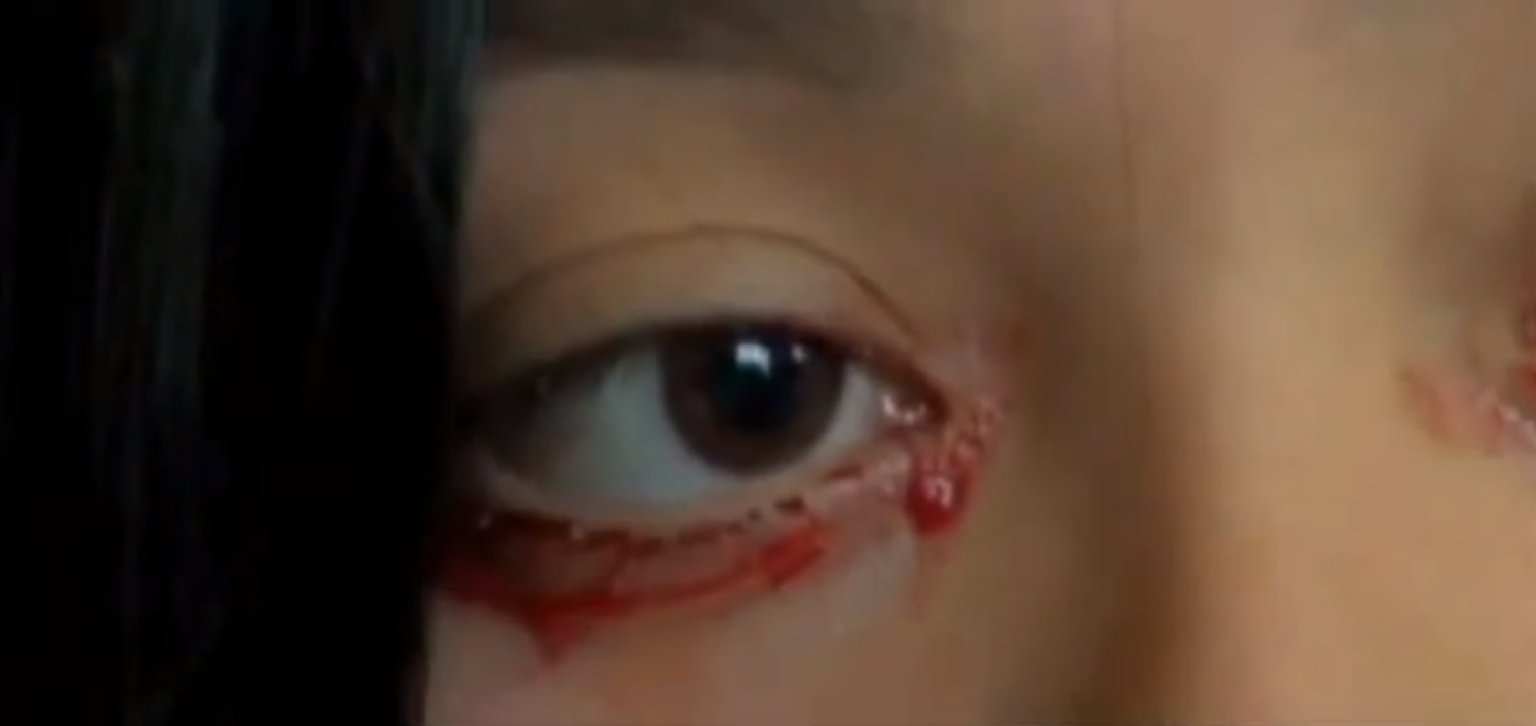
Incredible !! Woman Cries Tears of Blood, Baffles Doctors[photo]
Doctors believe the 20-year-old woman from Purrante, Chile, suffers from a rare ailment called haemolacria, which is extremely painful.
Oliva began shedding tears of blood earlier this month and called the pain was "indescribable."
It's not known exactly what causes haemolacria and there is very little modern medical science can do about the rare condition, which was first identified in the 1970s.
Those who suffer from haemolacria often have other ailments as well. Earlier this year, a Canadian man began to cry blood and doctors discovered he had been the victim of a venomous snake bite.
Oliva's condition has alarmed her so much that she refuses to leave the house and her father has launched a fund drive in Chile so she can be treated by specialists.
"Please put your hands over your hearts, see our situation and help my daughter,’ the father said.
Related articles
Video: OJB Jezreel speaks...
Related articles
Tuesday, 25 June 2013
Photo of OJB Jezreel since he went public with his illness
The music producer and artist needs N15million for a kidney transplant in India. To donate please see the acounnt details below - Babatunde Okungbowa. UBA - 1015075120.
Monday, 24 June 2013
Pawpaw, remedy for treating various diseases- Nutritionist [MUST READ]
Friday, 21 June 2013
Checkout the 6 Foods That Will Boost Your Energy And Make You Active
Tuesday, 18 June 2013
Is there anything new in Nutrition worth Talking about
If you have an interest in nutrition and enjoy reading up on the latest information and trends, you’ve likely noticed that there’s a certain blueprint for how things work in the field of food and health. Correct me if you see it differently, but most of the articles or books or blogs on this amazing topic focus on one of the following: the latest super-food, the newest supplement, the next toxic food you should stop eating, or the hot breakthrough diet that will help you lose weight. That’s pretty much the template for what the field of nutrition looks like for the average consumer of information. And for sure, this formula can certainly titillate some brain cells and keep our curiosity piqued – up to a point.
The challenge for me is that about 20 years ago, I started to get a little bored. I wasn’t feeling any nutritional turn-on anymore. How many times could a nutrition guy get excited about the next miracle food, the newest fat burning pill, or the latest evil food? Enough already. We need something more.
The field of nutrition is stuck in an old habit. It keeps
repeating itself as if it had a strange case of amnesia. After decades of dieting, we’re still getting plumper. And nutrition-linked diseases such as diabetes, metabolic syndrome, digestive disorders, fatigue, mood issues, and attention deficit concerns are skyrocketing. On a deeper level, our relationship with food and body is also at an all time emotional low. Some eye-opening surveys and studies are telling us that 9 out of 10 women dislike and even hate their body, and over 8 out of 10 women are on a diet. And approximately 40% of 9 year old girls claim they are dieting, or have dieted.
It’s time to wake up, smell the coffee or the tea or whatever you may be drinking, and do something different – and for no other reason than what we’ve been doing nutritionally and emotionally clearly isn’t working.
So, in the spirit of being interesting, creative, explorative, and maybe even a bit bombastic, I’d like to offer to you a list of 7 nutritional nuggets worth considering. These are intended as wake-me-ups, concepts that have the chance to get the nutrition world out of its’ perpetual spin cycle and into a place of depth, breadth, and wisdom. I’m interested to know how these land for you:
1. Nutrition Experts Need to be Consumed with a Grain of Salt
We’ve become so reliant on outside advice that we’ve lost the ability to access the wisdom of the greatest nutrition consultant on the planet – you. I love experts, I put myself out there as an expert, and I am happy to see every expert questioned, doubted, challenged, and occasionally spanked. Most experts tend to read their own bodily experience and translate it onto your body. They erroneously believe that if a specific diet works for them, it must therefore work for every human alive. This is as unscientific an approach as one could imagine, yet it masquerades as intelligent. Yes, there are plenty of general nutrition rules that apply to huge subsets of people. But for me, the deeper cut is that nutrition is not a one-size-fits-all business. Indeed, it’s a uniquely stunning field where biology, chemistry, lifestyle, and the inner workings of our psyche converge in a highly specific way for each individual. Most nutrition and health experts binge on power, fame, cash and glamour. They also get high on being the “one expert who is right.” Stop giving your power over to the experts. Give them a hug instead. Start believing in your own wisdom, experience and insights. Use experts as “consultants” – listen to what they have to say, then make choices from your own sense of dignity and authority.
2. Let Go of Your High Fact Diet
I’ve noticed that far too many people are in their heads about what to eat. We’re looking for the perfect diet, the one way to eat that will have us happy and healthy and fabulously chic for the rest of our lives. We also tend to believe that if we only had the correct facts, the right information that’s been carefully guarded by mysteriously smart people who know more than us, then we can be happy. Yes, facts and science and information are beautifully important. And, at the same time as we honor facts, we need to drop out of our worries, our endless search, our constant self doubt, and embrace the wisdom of the body. Listen to your own desires. Listen to what you crave. Experiment. Make mistakes. Get feedback from your body. How do you feel now in relation to what you ate then? Can you notice how a particular food impacts you? Can you sense how a supplement or pill affects you? Can you feel the subtleties of your own body? Can you quiet your mind enough to access the brilliant wisdom of your biology that’s ceaselessly giving you feedback and information about food and health?
3. Stop Worshipping Ancient Systems of Healing and Eating
I have watched too many friends, students, and clients get hooked on traditional systems that are old, wise, often brilliant, well thought out – and not always 100% applicable for humans of this day and age. In particular, many people embrace Ayurveda, Macrobiotics, or the concepts of the Paleolithic diet. Yes, these approaches bring tremendous insight and practical knowledge that we have long forgotten. I’ve benefited greatly from studying and practicing the principles of these diets. At the same time, the over-reliance on these systems often results in an intense fundamentalism, personal and nutritional isolation, and a waste of time in trying to follow in a precise and unwavering manner – principles that may have worked great eons ago, but don’t necessarily translate fully into our world today. Every old and ancient system needs some updating. Macrobiotics is a great example. The principles in this worldview are powerful and far-reaching. The problem is, most people are practice a form of macrobiotics that works fine if you’re from Japan, but not so well let’s say, if you’re a white dude from Mississippi. The challenge is, can you be bold and creative enough to take what truly works from these approaches, and toss out what doesn’t?
4. Do We Really Know What Health Is?
When I first started practicing in NYC about 30 years ago, my high-powered Wall Street clients fascinated me. For one thing, they made gobs of money. How did they get so rich? They were incredibly motivated and educated, and they were all following intense workout and running programs despite long hours at work and a family at home. Many had excellent diets. Yet they all had some type of intense health complaint – digestive issues, fatigue, brain fog, mood swings, and low immunity. What especially caught my attention was that they were all shocked as to why they weren’t “healthy.” The logic was, “I’m doing all these healthy things for myself, so I should certainly look and feel healthy.” We tend to limit health to nutritional, metabolic and exercise factors. And collectively, we haven’t quite made the connection that health is also given by who we are, how we think, what we feel and believe, how we conduct ourselves in the world, how honest we are, how authentic we are, our sense of spiritual connection, the degree of love in our life, of pleasure, rest, play, purpose, and so much more. Health is not just about what you do (diet, exercise) – it’s also about who we are at the deepest place of our being. Can we be daring enough to go there?
5. Your Health Issue Isn’t a Problem – it’s a Solution
Most of us are taught to see our symptoms and diseases and unwanted habits as problems, and as an enemy we must attack and defeat. Clearly, these experiences aren’t much fun, they can ruin a life, so it makes perfect sense to treat our unwanted health issues with any strategy that helps us conquer and crush it. Or does this make perfect sense? Here’s a another view, long held by the ancient Greeks, and taught about as well in the mystic tradition of the Kabbalah: every symptom or disease or unwelcome habit is really a visitation from your guardian angel. It’s a divine intervention, a deep and holy experience designed as a course correction for the soul. However we have been straying from our path, or whatever we need to evolve our character and grow spiritually – our disease provides the framework for that. We’re learning a lesson. Perhaps we’re learning about humility, or patience, or slowing down, or letting go of our usual distractions so we can go within. Perhaps the lessons are very obvious, or maybe their complexity is revealed over time. Whatever the case, once we can hear the message that the symptom is delivering, we then have the best chance of letting that symptom go. Ignore it or fight it, and the dis-ease will tend to grow louder. What would life be like if you saw every health challenge you face as an opportunity to grow and evolve? What if we let go of fighting our illnesses, and simply listen a bit more first? What powerful lessons might they be teaching us?
6. What You Eat is Only Half the Story of Good Nutrition
The other half of the story by the way, is who we are as eaters. Meaning, what we think, feel, believe, our level of stress or relaxation, the amount of pleasure in a meal, our attention to the eating experience, the inner story we are living out, the speed at which we consume our food, the degree to which we feel nourished, the intention with which we choose a food – all of these, and more, powerfully, literally and scientifically impact the metabolism of every meal we eat. The ancients were surely right on this one all important point – that mind and body exist on a continuum, are not separate from one another, and indeed have a powerful energetic influence flowing between them. The new field of Mind Body Nutrition clearly asserts the simple science behind these concepts, but the proof is in your own experience. Can you feel how nutrition is more than just the food you eat? Have you noticed that eating under stress literally diminishes your digestive power? And can you see how the thoughts you think and emotions you feel are constantly bathing your biology in their energetic waves of influence?
7. The Best Nutritional System Always Has a Higher Purpose
Many people follow their healthy diet so they can be healthy. Sounds sensible. Others eat a good diet so they can have oodles of energy, or endurance, or strength, or a slender body. I’d like to suggest that this isn’t always enough. The field of nutrition has become a bit religious. It tells us to follow its’ commandments devoutly, piously, and if indeed we do adhere to our dietary system perfectly, there’s a feeling that we’re somehow good boys and girls – clean, holy, and assured of a place in nutritional heaven. I’m still surprised how so many people are on a “health crusade.” For sure, I love health, I practice it as best I can, and teach about it with a lot of passion. But I’m suggesting that good health and long life is not enough. So what if you live to be a healthy 100 years old – yet you’re a total jerk. The people around you would rather have you dead a long time ago. Health by itself doesn’t always have meaning. Humans need a reason, a purpose for being here, alive, on planet earth. So what if you spend a ton of energy sculpting a skinny body. What else is happening in your life? What’s your skinny body for? What gift are you here to give others? Is your life purpose simply to eat vegetarian, or raw food, or low calorie, or macrobiotic? A healthy body is a grace. Are you willing to use it to give back to the world? Can you see that the body is meant to serve a deeper and more beautiful purpose in the world that’s more than just being pretty, skinny or healthy?
It’s a powerful act of self-evolution to question our own assumptions, examine our health strategies, and to put our cherished beliefs under the microscope to see what truly works. The complexity of the field of nutrition and eating psychology makes it both frustrating and fascinating. I believe that if we can have a good tolerance for differing viewpoints, for scientific studies that conflict with one another, and for a multitude of experts who espouse that their way of eating is best – then we are well equipped to smile about the subject of food, and enjoy a good meal – whatever that meal may be. - See more at: http://psychologyofeating.com/is-there-anything-new-in-nutrition-worth-talking-about/#sthash.d3TSAdnA.dpuf
Sunday, 16 June 2013
LAdies only.. How to fake a bikini body
Got this article and i do know my ladies will love it.
Getting into swimsuit-ready shape isn't only about diet and exercise. The Thread has a few quick fixes that will get you looking and feeling beach brave and pool proud in no time.
Dress to flatter - No need to hit the gym for this trick--this is all about the size and placement of your bikini. The bottoms shouldn't sit too low on your hips, as that makes them look wider than they are. Instead, let the bottom fit slightly higher to create a narrowing effect and bring the eye upwards.
Block it out - The slimming colorblock trend we love so much on dresses works just as well with swimwear! Color-coordinating panels make you look trim in all the right places.
Glow baby, glow - Fake or emphasize a toned physique with the simple application of self tanner or gel bronzer. This will even out your skin's complexion, camouflage cellulite, and give you that healthy glow women strive for in the warmer months. You can even define specific areas (like under your calf muscles) to create extra definition. More after cut